9 min read
The Temple of the Maiden
On proportion, light, and the optical refinements of a perfect rectangle
It is the most copied building in the world, and yet almost nothing about it is straight. Every column leans inward; every step swells faintly upward. The ancients knew that a perfectly straight building looks crooked to the human eye — and so they bent the marble until it appeared still.
What you are looking at
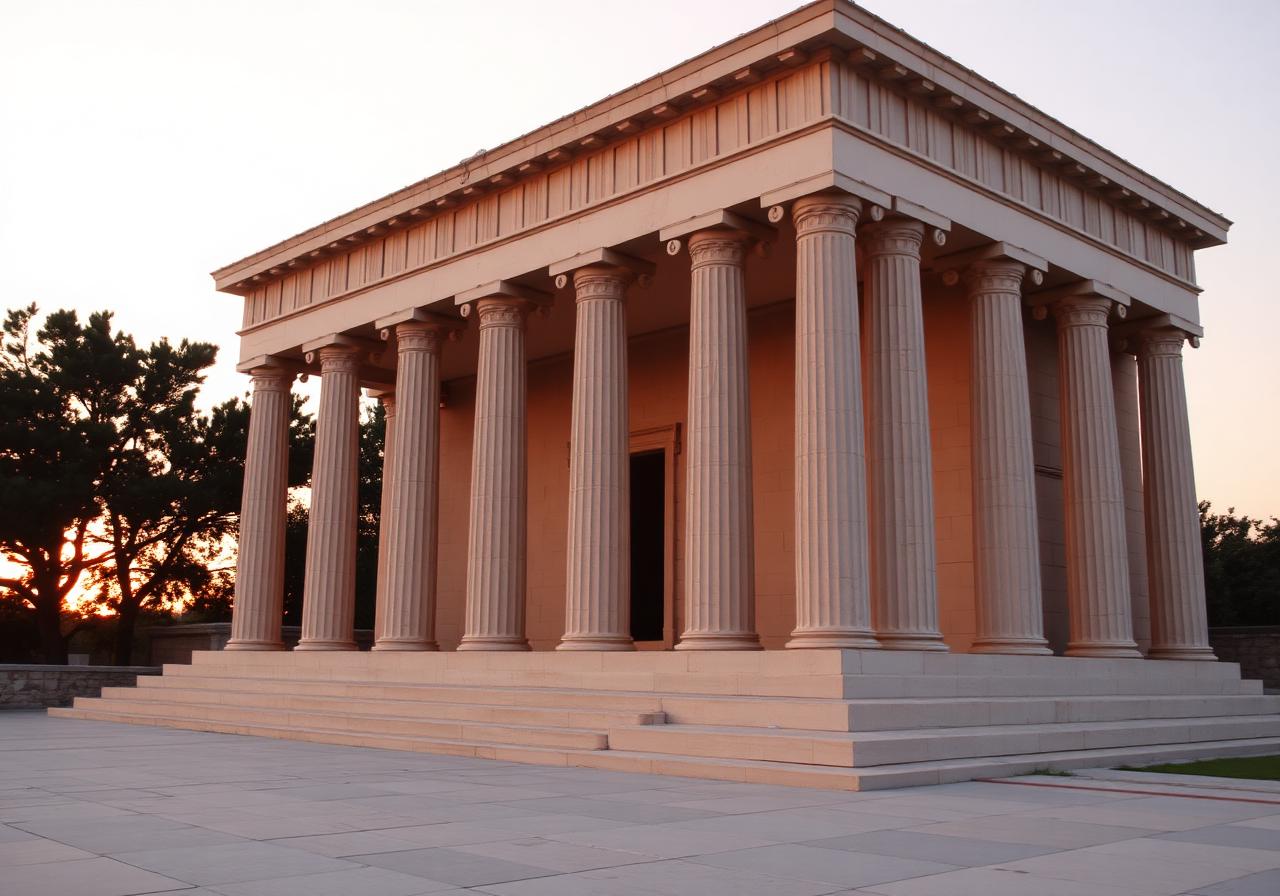
A Doric peripteral temple of forty-six outer columns, built in fifteen years of the fifth century BCE on the highest point of the citadel. It was painted, not white. Its interior held a colossal statue of the city's patron, made of gold and ivory, long since vanished.
The optical corrections
The base curves up by about eleven centimetres at the centre. The corner columns are thicker and tilt inwards by some seven centimetres. Without these adjustments the temple would seem to sag in the middle and splay at the corners — a quiet trick of the eye older than perspective drawing.
The frieze, in fragments
A continuous band of carved figures once ran around the inner wall, depicting a great civic procession. Much of it now lives in museums across Europe; what remains here speaks loudly enough.
When to stand here
Early light strikes the east front; the long shadows of late afternoon fall along the north flank. Avoid noon — the marble glares and the carvings flatten.